Tuesday, September 16, 2008
Word salad
I joined the CELery after More Food for Thought was already well under way and did not contribute to it. I’m just spreading the word on what looks like an interesting cookbook for a good cause. My online pal Katharine O’Moore-Klopf was the production editor, and I’ll let her tell you all about it.

Political ambiguity
According to the Associated Press, “Wall Street turmoil underscores the need to overhaul ‘the outdated and ineffective patchwork quilt of regulatory oversight in Washington,’ Republican presidential contender John McCain said Monday.”
Given McCain’s staunch support for deregulation of markets over the last decades, the question arises as to what sort of overhaul he has in mind. Those in favor of greater regulatory control can see “overhaul” or “reform” as meaning changes to bring about more and better regulation. Those opposed to any regulatory control can see “overhaul” or “reform” to mean abolition of all regulation.
On the face of it, the statement can mean either. This is certainly an efficient way to tell everyone what they want to hear. It’s a technique writers interested in clarity should not emulate.
Given McCain’s staunch support for deregulation of markets over the last decades, the question arises as to what sort of overhaul he has in mind. Those in favor of greater regulatory control can see “overhaul” or “reform” as meaning changes to bring about more and better regulation. Those opposed to any regulatory control can see “overhaul” or “reform” to mean abolition of all regulation.
On the face of it, the statement can mean either. This is certainly an efficient way to tell everyone what they want to hear. It’s a technique writers interested in clarity should not emulate.
Sunday, September 14, 2008
A shipwreck at sea can ruin your whole day
Way, way down at the bottom of this blog is a little green and white icon that looks something like the Brooklyn Bridge (except that is not what it is meant to look like). That’s an indicator that I use a free service, called SiteMeter, to keep track of how many people visit the blog.
The free version of SiteMeter is what you might call web analytics lite. It isn’t robust enough to service the needs of a large ecommerce company, but it gives me interesting information and, more important, yet another way to waste time during the day, checking on my site stats.
SiteMeter makes their money from paid subscribers, of course; and it gives them more data than it gives me. That’s fine, and more power to them.
Well, for the last several months, SiteMeter has been promising a spiffy new user interface, and this weekend was when they decided they were ready to roll it out. Unfortunately, although the company’s management may have been ready to roll out the new software, the new software wasn’t ready to be rolled out. It has, um, performance issues, sort of the software equivalent of erectile dysfunction. It can’t stay up, in other words.
So now SiteMeter is rolling the interface back to the old software, which worked fine. I have no inside information on whether they’re going to try to repair the new software or abandon it and start over. My opinion, for what it’s worth, is that this was a really, really bad idea. Instead of continuing to serve data as HTML and just spiffing up the presentation, they got all artsy-fartsy and implemented the interface in Flash. This led to three completely predictable problems:
Why do companies invest months of expensive development time in a bad idea and then roll it out when they should already know it cannot possibly work? It seems to me that this is consistent with the magical thinking school of management: Logic be damned! If I keep saying something will happen, and I say it enthusiastically enough, by golly it will happen. “Magic words of poof, poof, piffles, make me just as small as Sniffles!”
Clear thinking matters.
The free version of SiteMeter is what you might call web analytics lite. It isn’t robust enough to service the needs of a large ecommerce company, but it gives me interesting information and, more important, yet another way to waste time during the day, checking on my site stats.
SiteMeter makes their money from paid subscribers, of course; and it gives them more data than it gives me. That’s fine, and more power to them.
Well, for the last several months, SiteMeter has been promising a spiffy new user interface, and this weekend was when they decided they were ready to roll it out. Unfortunately, although the company’s management may have been ready to roll out the new software, the new software wasn’t ready to be rolled out. It has, um, performance issues, sort of the software equivalent of erectile dysfunction. It can’t stay up, in other words.
So now SiteMeter is rolling the interface back to the old software, which worked fine. I have no inside information on whether they’re going to try to repair the new software or abandon it and start over. My opinion, for what it’s worth, is that this was a really, really bad idea. Instead of continuing to serve data as HTML and just spiffing up the presentation, they got all artsy-fartsy and implemented the interface in Flash. This led to three completely predictable problems:
- Graphic artists got hold of the process and introduced all kinds of pretty but completely illegible presentation formats.
- Because the presentation is controlled by Flash, the browser cannot reach in and make the fonts larger (more legible)—and the design does not include Flash buttons to do the same thing.
- Accessing the data and refreshing the display take way too long.
Why do companies invest months of expensive development time in a bad idea and then roll it out when they should already know it cannot possibly work? It seems to me that this is consistent with the magical thinking school of management: Logic be damned! If I keep saying something will happen, and I say it enthusiastically enough, by golly it will happen. “Magic words of poof, poof, piffles, make me just as small as Sniffles!”
Clear thinking matters.
Thursday, September 11, 2008
Listen up, hockey moms
The question of residual errors crops up from time to time, and I give a convoluted explanation involving math, which generally causes people’s eyes to glaze over. Fellow copyeditor Lloyd Davis, a hockey fan, offers this, which I quote with permission:
Copyeditors are like goalies. We prevent a lot from getting past us, but even the best one has an off night, or just gets fooled by a shot that he would otherwise stop easily.
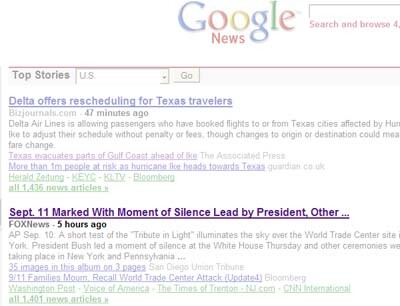
Thursday, September 04, 2008
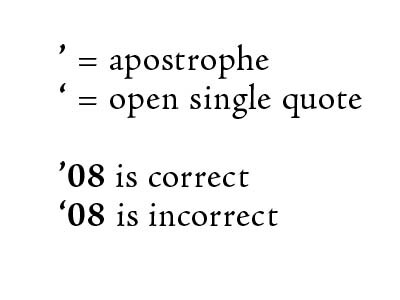
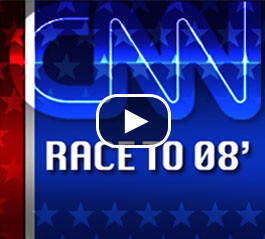
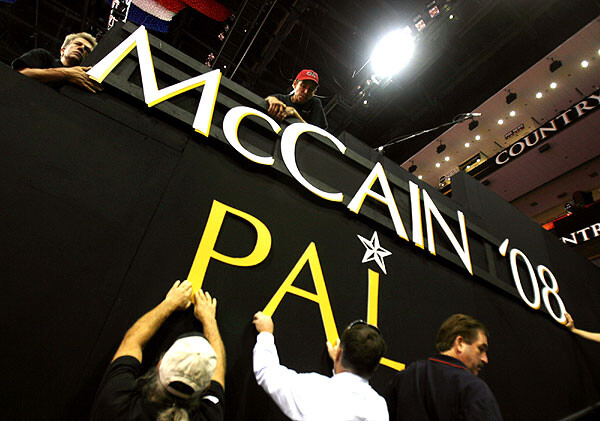 ... and then there’s this, about which the less said the better:
Wednesday, September 03, 2008
The ear of a speechwriter
If you’ve been listening to the two political conventions, maybe you’ve noticed an interesting distinction.
At both conventions, there have been a number of warm-up speeches each night followed by one or two major speeches.
The majority of the warm-up speeches at the DNC shared a number of stock phrases—platform or campaign bullet points, basically—verbatim. This suggests (and one commentator I heard confirmed this) that these speeches were professionally written by a small group of speechwriters. While it was a bit boring to hear the same arguments repeated by every speaker, there was a cohesiveness to the presentation that got the message across.
In contrast, listening to the RNC, it’s pretty clear that all the warm-up speakers are responsible for their own speechwriting. That is, if they have help, it’s from someone on their own payroll, not from a speechwriting shop hired by the party. (That, or the party speechwriters are just not very good, but that seems doubtful.) The speeches are all over the lot in terms of content, emphasis, and points made; and they’re tremendously variable in terms of the writing craft—some are truly abysmal. The variety makes these speeches a bit more interesting, but the opportunity for really bad political gaffes is magnified tremendously. To me it seems like a tactical mistake—one I wouldn’t want a client of mine to make.
Both of these are essentially four-day infomercials, as many commentators have noted. As such, it seems to me they should have the best production values money can buy, and that includes professional writing.
Craft matters.
At both conventions, there have been a number of warm-up speeches each night followed by one or two major speeches.
The majority of the warm-up speeches at the DNC shared a number of stock phrases—platform or campaign bullet points, basically—verbatim. This suggests (and one commentator I heard confirmed this) that these speeches were professionally written by a small group of speechwriters. While it was a bit boring to hear the same arguments repeated by every speaker, there was a cohesiveness to the presentation that got the message across.
In contrast, listening to the RNC, it’s pretty clear that all the warm-up speakers are responsible for their own speechwriting. That is, if they have help, it’s from someone on their own payroll, not from a speechwriting shop hired by the party. (That, or the party speechwriters are just not very good, but that seems doubtful.) The speeches are all over the lot in terms of content, emphasis, and points made; and they’re tremendously variable in terms of the writing craft—some are truly abysmal. The variety makes these speeches a bit more interesting, but the opportunity for really bad political gaffes is magnified tremendously. To me it seems like a tactical mistake—one I wouldn’t want a client of mine to make.
Both of these are essentially four-day infomercials, as many commentators have noted. As such, it seems to me they should have the best production values money can buy, and that includes professional writing.
Craft matters.
Subscribe to:
Posts (Atom)